Services

Solar PV inspection. One delivery discipline.

Utility and rooftop solar PV thermography (#solar). A five-stage procedure (#procedure), a fixed severity-ranked output format, fixed turnarounds.
Jump to · Procedure Jump to · Equipment
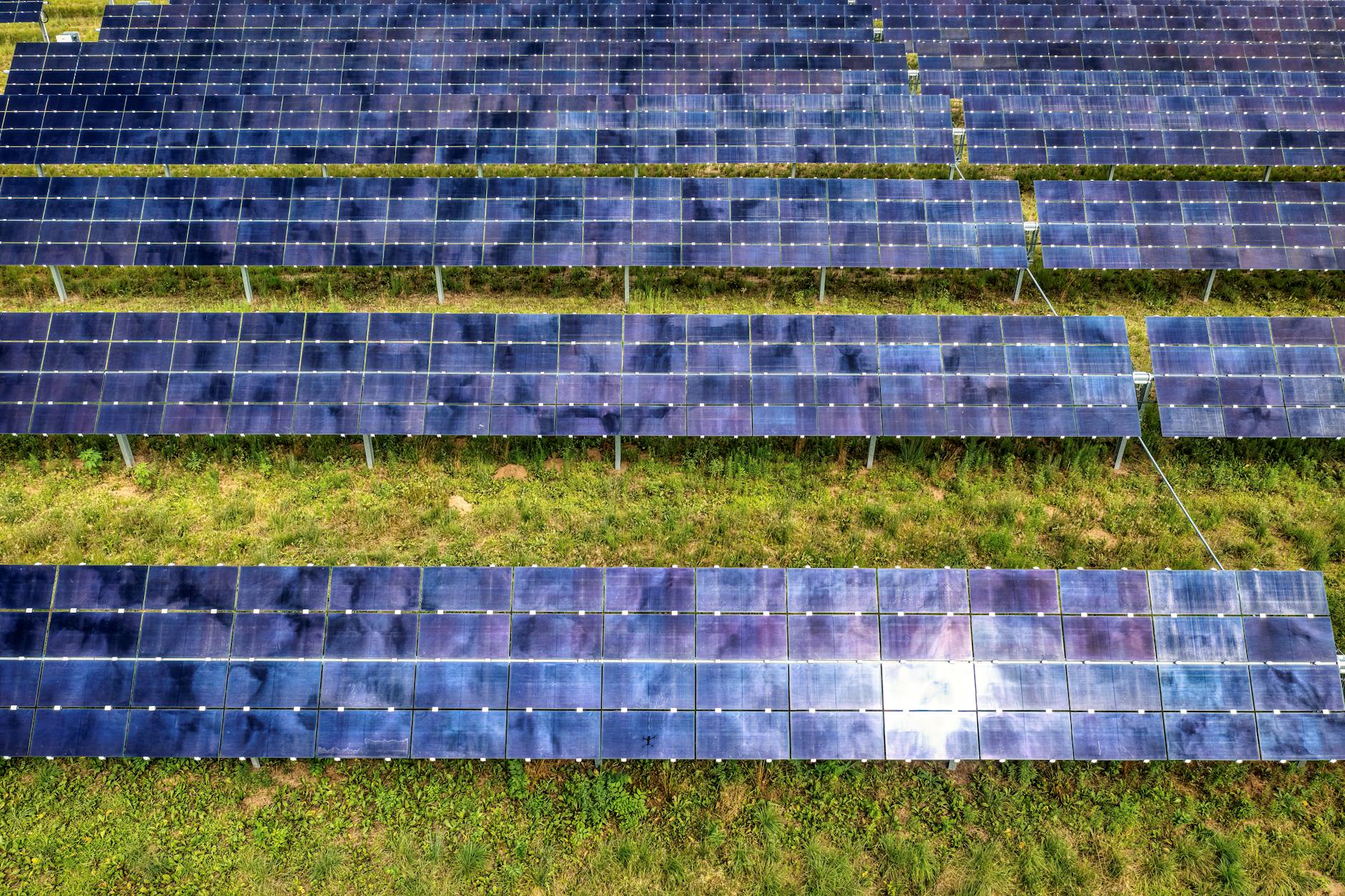
Thermal pass over a utility-scale ground-mount solar array thermal pass · 30–40 m AGL · 9.3 MWp ground-mount
§ 01 · Solar PV

Solar PV inspection

Thermographic survey of crystalline-silicon arrays. Two-pass capture: nadir thermal at 30–40 m AGL for anomaly mapping, oblique RGB for context and module-ID confirmation. Anomalies classified by ΔT against ambient and string-baseline, severity-ranked S1–S4, returned as GeoJSON tied to module geometry.

Standard reference: IEC TS 62446-3 for thermography, IEC 61724-1 for environmental conditions during the flight window.

Open Cat A3 ≤ 5 MWp · single-day String-level resolution
Solar inspection procedure

How a flight runs, end to end.

Compliant with IEC TS 62446-3 (outdoor IR thermography of PV) and IEC 61724-1 (PV performance monitoring). EU 2019/947 Open Category A1/A3. GDPR-compliant data handling. Site imagery stored encrypted, deleted on client request.

01 Pre-flight planning remote · 1–3 days before
  • Site briefing call: plant layout, MW, string/inverter map, access, on-site contact.
  • Review of prior reports and current performance-ratio anomalies, if available.
  • Flight window scheduled for clear-sky conditions, irradiance ≥ 600 W/m² (IEC TS 62446-3 minimum).
  • NOTAM / airspace clearance filed with Slovenia CAA (or competent authority for IT, ES, SI, AT or HR).
  • Operator registration, A1/A3 certificate, €1M liability and hull cover verified for the flight date.
  • Pre-flight checklist sent to client: gate access, livestock notice, inverter status, on-site duration.
02 On-site setup 30–45 min
  • Site walk with plant contact; confirmation that all strings are energised and inverters operational.
  • Irradiance measurement with calibrated pyranometer / reference cell, logged for the report.
  • Ambient temperature, wind speed, cloud cover recorded.
  • Mission upload: automated grid pattern, ~30–40 m AGL, nadir orientation, 80% front / 70% side overlap.
  • Safety perimeter established; ground crew briefed.
03 Aerial thermal + RGB capture 1-2 hours / 5 MW
  • DJI Mavic 3 Thermal: radiometric thermal (640×512, ±2 °C) + 4/3 CMOS RGB, synchronised capture.
  • Automated mission with manual override available.
  • Live anomaly check on a second screen; obvious hotspots flagged for a low-altitude verification pass.
  • Coverage of full array plus combiner boxes, inverter housings, and transformer enclosures where line-of-sight permits.
  • Battery swaps pre-planned to avoid interrupting a string row mid-capture.
04 Post-processing and analysis 3–5 working days
  • Radiometric mosaic stitched in DJI Terra / DroneDeploy.
  • Anomaly classification per IEC TS 62446-3, on two axes:
    • Severity: Classes of Abnormalities (§7.3.2):
      • CoA 1: no abnormality, within normal operating range
      • CoA 2: thermal abnormality (tA): investigate cause, rectify within a reasonable period
      • CoA 3: safety-relevant abnormality (dtA): imminent shock / fire risk, recommend prompt disconnection
    • Pattern: thermal abnormality matrix (Annex C): single-cell hotspot (ΔT 5–20 °C), substring, full module / bypass diode / disconnected string, junction box / connector / interconnect fault
  • Each defect geo-tagged, photographed (thermal + RGB), and cross-referenced to string ID.
  • Severity prioritisation: critical (immediate revenue / safety impact), major (within 30 days), minor (next maintenance cycle).
  • Operator QC pass before report release.
05 Deliverables -
  • PDF report: executive summary, methodology, weather log, full defect list with images, severity ranking, recommended action.
  • Interactive web map: clickable defects with thermal + RGB images and GPS coordinates.
  • CSV / GeoJSON export of all anomalies for CMMS / SCADA integration.
  • High-resolution orthomosaic (RGB + thermal) on request.
  • Raw radiometric data available for client archival.
06 Follow-up -
  • 30-minute debrief call to walk through findings and prioritisation.
  • Optional re-inspection of repaired defects.
  • Annual or semi-annual cadence available under framework retainer.

Typical timelines

Plant sizeOn-siteReport delivery
Up to 1 MW2–3 h3 working days
1–5 MW4–8 h4 working days
5–20 MW1-2 days5 working days
20 MW+2–4 days7–10 working days
Equipment

Standard plus a named upgrade path.

One aircraft on day one. The upgrade unit isn't on a shelf. It's named so you can see how the operation scales without surprise.

Standard equipment · day-1

DJI Mavic 3 Thermal

Open Cat A3
  • ClassEU C1 · CE marked
  • Thermal640 × 512 · ±2 °C · radiometric
  • RGB4/3 CMOS · synchronised
  • MTOWSub-1 kg · Remote ID + AirSense (ADS-B in)
  • Operator weight classBelow 25 kg, Open A3 compliant
Upgrade path · on request

DJI Matrice 400 · Zenmuse H30T

Specific Cat
  • ClassSpecific Cat · declaration
  • ThermalH30T · 1280 × 1024 · radiometric
  • RGBZoom 34× · wide + tele
  • MTOWHeavy-lift · dual-payload
  • Lead timeQuoted per site · 2–3 wk planning
Before you brief us

The questions procurement asks first.

Do you need to shut the plant down to inspect it?

No, the opposite. Strings have to be energised and producing for thermal faults to show, so we fly during normal operation. No downtime, no disconnections.

Who owns the data, and where is it stored?

You do. Imagery and reports are stored encrypted within the EU and deleted on request. Handling is GDPR-compliant. Nothing is shared or published without your say-so.

Can the output drop straight into our CMMS or SCADA?

Yes. Anomalies come back as GeoJSON tied to module geometry and CSV with string IDs and severity classes, built to ingest directly, with no manual re-keying.

What's the smallest site worth inspecting?

We focus on utility and portfolio-scale PV. For a very small rooftop array a one-off survey rarely pays for itself. If that's the honest call, we'll say so and point you to a better-fit operator.

What conditions do you need for a valid survey?

Clear sky and irradiance ≥ 600 W/m² (IEC TS 62446-3 minimum). We book an irradiation window rather than a fixed date, and reschedule if conditions don't hold.

Can you fly our sites across the border?

Yes, we operate across Slovenia, north Italy, Austria, Croatia and Spain. Cross-border movements are declared with the competent authority before the flight.

Pilot project

First inspection at-cost, before you commit a portfolio.

A single site, scoped end-to-end, delivered with the full data package. You evaluate the deliverables against your O&M workflow before any framework agreement is discussed.

Request pilot scoping Typical response · ≤ 1 working day